Before Your Interior Painters in Hamilton Pack Up: A Handover Check
The hour before the van gets loaded is the most useful hour of an interior repaint, and it is the one most people waste. Nobody wants to look fussy at that point, so the small finishing items get waved through, the crew drives off, and those marks stay in the house for as long as the paint does. Careful interior painters in Hamilton would far rather hear about them while the ladders are still up.
A handover check is not a fault-finding exercise. It is one walk through the house with the painter, under the light the rooms actually get, ending in a short agreed list of anything worth coming back for.
Here is what to look at, in what order, and how to raise it without souring a relationship you may want again.
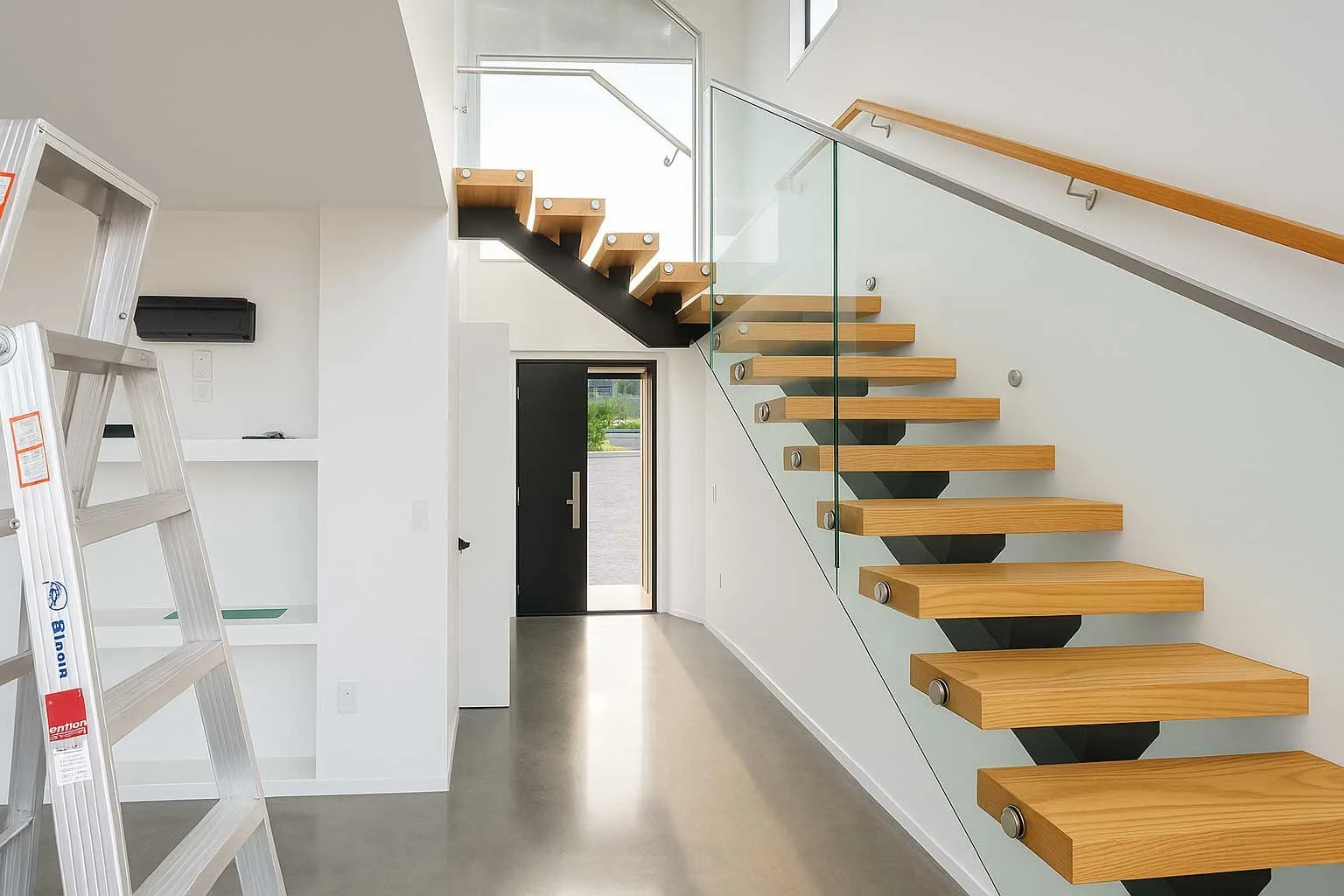 |
| Painted walls and trim beside the timber staircase, Pirongia new-build interior. |
Settle the light before you judge the work
Paint is read by light far more than by colour, which is why viewing conditions belong in the written scope at the start rather than in a disagreement at the end. A wall judged while you stand in the room, under the lighting that room actually has, is a fair test. The same wall lit by a torch held flat against the plaster is not, because a skimming beam finds things nobody living there would ever notice.
Do the walk twice if the day allows: once with the curtains open, once after dark with the lights on. Newer homes around Rototuna and Flagstaff often carry downlights set close to the wall plane, which changes what shows up on a ceiling and along the top of a wall. The suburb page covers the same interior scopes: https://hamilton.tomarcontracting.co.nz/rototuna-painters.html
Ceilings first, because the light is hardest up there
Stand under the downlights and look along the ceiling rather than up at it. You are checking for shadow lines where the joints run, faint circles where fastener heads sit, lap marks where a wet edge was lost, and dull shapes where a repair drank more paint than the surface around it. Flat ceiling paint forgives a small wave in the plane; it does not forgive porosity differences.
If the ceiling was left out of the scope, this is where that decision shows itself: fresh wall colour beside an older ceiling makes the ceiling read grey and tired. Where patches are ghosting through, the answer sits back at the preparation stage rather than in another topcoat, as our guide to assessing walls before painting sets out in order.
Cut lines, switches and the places people walk past
The line where wall meets ceiling is the one visitors register without knowing they are looking at it. Run your eye along it from one end of the room to the other. A good line holds the same width the whole way. A rushed one wanders, then goes thin where the brush ran dry.
After that, the parts nobody photographs. Around light switches and power outlets, where wall colour creeps onto the plate. The top edge of the skirting, where a heavy edge or a drip shows from above. Behind doors, inside wardrobes if they were included, and the short return walls beside windows. Filled patches deserve a second look here too, because flashing usually turns up on a wall you walk past rather than the one you sit facing.
Trim and doors, including the edges nobody opens
Trim takes a harder, shinier finish than the walls because it gets handled, kicked and wiped, so any skipped step sits right at eye level. Look at architraves for nail holes filled but never sanded back, and along the skirting for runs where a loaded brush was dragged rather than laid off.
Doors need their own pass. Open each one, check the hinge edge and the latch edge, then run a hand along the top edge, which is the single most commonly skipped surface in a house. Confirm the hardware went back on cleanly and that nothing is sticking against fresh paint.
When the trim turns up after the walls
On our Pirongia new build, part of the skirting and architrave went in once the walls and ceilings had already been coated. That trim had to be masked carefully and worked through its own filling, sanding, priming and coating order, while the doors were taken to a protected area and prepared there for a sprayed finish. The record of that Waikato new-build interior covers how those stages were fitted around the other trades. If a renovation is running the same way, ask at quote stage how late trim will be handled, because coating a skirting that arrives last is a different piece of work to coating one that was there all along.
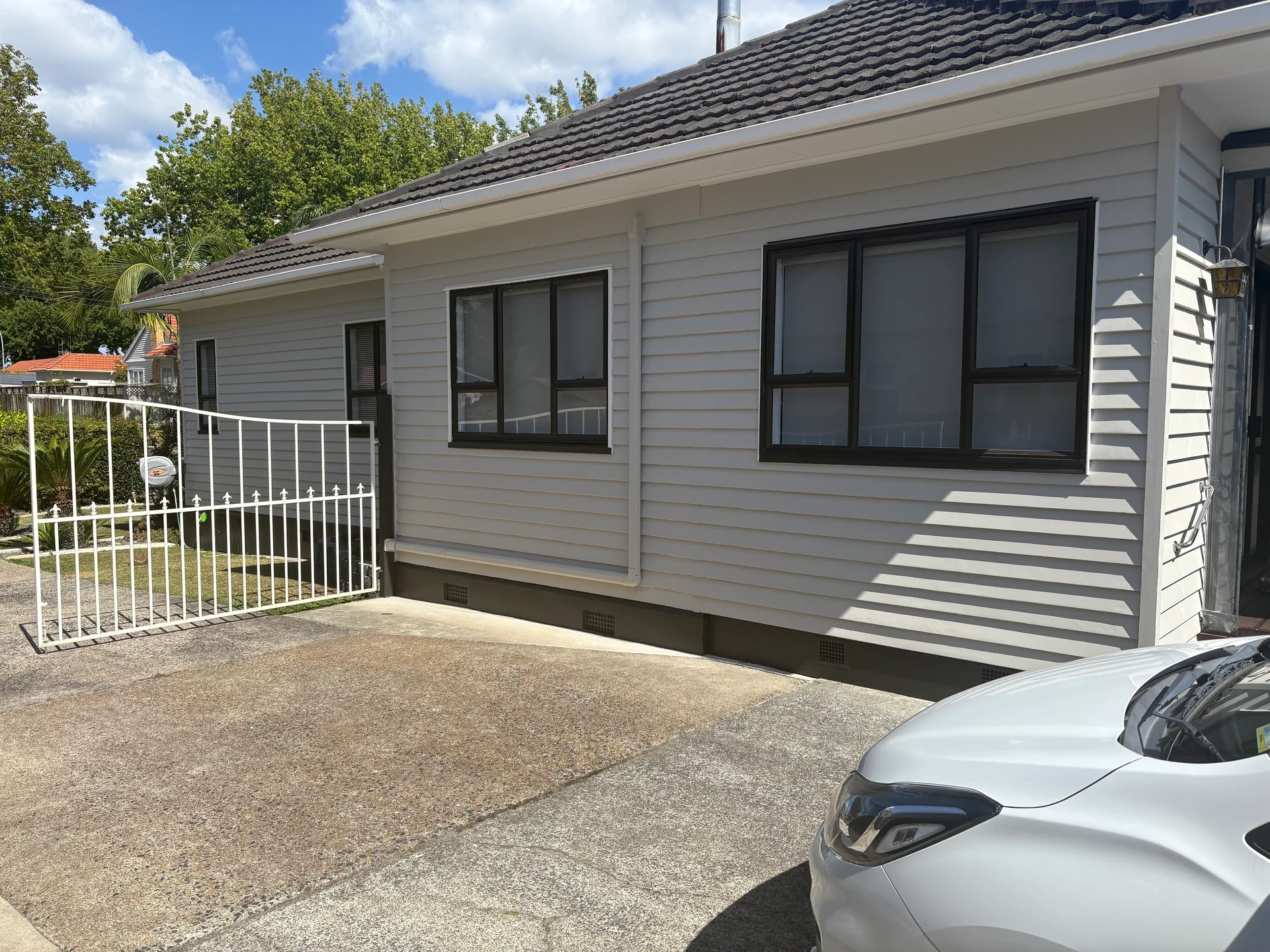 |
| Interior doors and trim being prepared while the walls and ceiling are in progress. |
Raising a touch-up list with your interior painters in Hamilton
Mark items instead of arguing about them. Low-tack tape flags or sticky notes beside each one show the painter exactly what you mean. Walk the house together in a single pass and hand over one list, not three messages across a fortnight.
A handful of items on a whole-home repaint is normal, and any tradesperson worth having back expects it. What is not normal is the same fault repeating room after room. Where several rooms ran as one staged programme, check the joins between stages too, since that is where a colour or sheen mismatch hides. Our whole-home repaint page covers how those stages get planned.
- Ceilings checked under their own lighting, looking along the surface rather than straight up
- Cut lines at ceilings, architraves and skirting holding a consistent width
- Filled patches, switch surrounds and outlet edges checked for flashing and overpaint
- Door tops, hinge edges and latch edges coated, with hardware refitted cleanly
- Sheen consistent across the trim in each room, with no dull touched-in spots
- Floors, joinery and fixtures clean, protection lifted and waste taken away
- Agreed touch-up items written down and a return arranged before the crew leaves
What a good final walkthrough covers
Both parties present, the whole house in one circuit, and a written list the painter keeps a copy of. Leftover paint labelled by room so a future repair matches. Protection removed, surfaces wiped down, rubbish off the section. And a word about drying, since a film that feels dry has not finished hardening underneath.
Put the walkthrough in the scope before the job starts, not as a favour at the end. When Tomar Contracting Hamilton quotes interior work, the site assessment sets the surfaces, the preparation, the coating system, access and exclusions in writing, which is also what makes two quotes comparable.
FAQ
What should I check before the painters leave the house?
Walk every room with the painter under the lighting you normally use, looking along ceilings and cut lines rather than straight at them. Check door tops and edges, skirting, switch surrounds and any filled patches for flashing. Agree one written touch-up list and arrange the return visit before the gear is packed.
Is it reasonable to ask for touch-ups after handover?
Yes, and it goes better for everyone if the request arrives quickly and as one list. Separate genuine paint faults from damage caused later by movers, furniture or another trade, because that second group is a different conversation. A scope that names a final walkthrough keeps this simple.
Why does new interior paint mark so easily at first?
Because the film keeps hardening long after it stops feeling wet, so the surface is still soft while the room already looks finished. Follow the product data sheet on re-entry and full use rather than the diary, and allow for damp Hamilton weeks pushing those times out. Slide furniture back gently and keep it off the walls longer than feels necessary.
Tomar Contracting Limited – Hamilton & Waikato keeps its base at 59 Boundary Road, Claudelands, and books interior repaints right through the city and out to Cambridge, Te Awamutu, Morrinsville, Ngāruawāhia and the wider Waikato. If a handover is coming up, or a repaint is still at the thinking stage, ring 0800 866 272 on a weekday.


Comments
Post a Comment