GIB Stopping Hamilton: Which Rooms Need a Level 5 Finish?
Renovations and new builds around Hamilton keep arriving at the same fork. The board is up, the stopper asks what standard the walls are being finished to, and nobody is sure what the answer changes. GIB stopping is the jointing work every plasterboard sheet needs before paint. A specified Level 5 finish is a written commitment layered on top of that, and applying it across a whole house buries effort in rooms where nobody will notice.
Take it space by space, and let the lighting make the call rather than the label on the door.
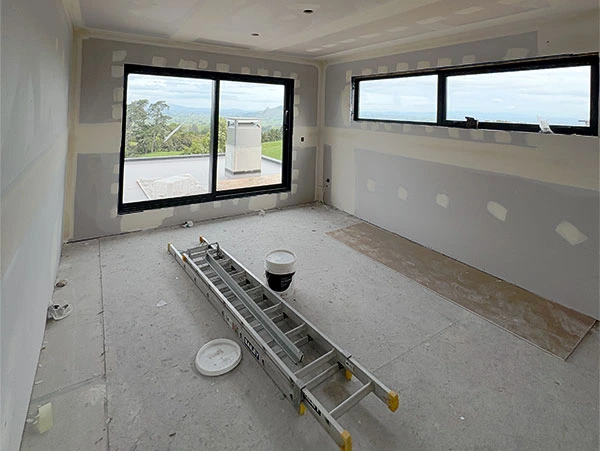 |
| Stopped plasterboard joints on walls and ceiling during preparation, Pirongia new build. |
What Level 4 already gives you
GIB publishes finish levels for painted plasterboard, and Level 4 sits behind an enormous share of interiors here. Seams taped, angles run, every fastener head filled, compound built up in passes and spread wide enough that each joint disappears into the board either side, then sanded. There is nothing second-rate about it.
What Level 4 skips is the board paper out in the field between the seams. Paper and dried compound are different materials, so they take up coating at different rates and catch light differently. In soft daylight you will never pick it. Put a run of downlights half a metre off that wall and the story changes. That material difference, rather than sloppy trowel work, is behind most complaints about a wall showing its joints, and the team at Tomar Contracting Hamilton hears it most often from newer homes with unexpectedly directional lighting.
What a specified Level 5 finish adds
Level 5 takes that work as given and layers on two further requirements. First, tighter rules for what sits underneath: framing tolerances, and back-blocking where the joints call for it, settled before the sheets go up. Second, an air-drying compound taken thinly across the entire face, so the coating lands on one continuous material instead of alternating between compound and paper.
Two limits deserve saying plainly. Level 5 will not straighten framing that was already out when the board was fixed; it is a finishing step, not a structural correction. And GIB is careful with its own wording: expected critical light can still reveal some variation. Nobody can promise a wall that gives nothing away from every angle. More on that in when a Level 5 finish earns its keep.
The torch test, run before anyone prices the job
You can do this yourself tonight. Turn the room lights off, hold a torch flat against the wall so the beam skims along the surface instead of striking into it, and walk it slowly across the walls and ceiling.
Every seam, fastener and old repair will announce itself. That is expected, not a fault in itself. What you are measuring is how busy it looks at that angle, and whether any fitting in the finished room will light it that way. A torch held flat is a worst case; a bedroom pendant is nowhere near it. If the wall looks noisy and the room also has a long window down one side, a low winter sun angle, or a fitting recessed close to the surface, you have your answer.
Do the same against a sample of the sheen you intend to use: flat and low-sheen coatings forgive a lot, while semi-gloss reflects and reports everything underneath.
Room by room, light by light
Hallways, stairs and recessed lighting
Corridors cause more grief than any other space. They are long and narrow, the fittings often sit close to the wall line, and you look down them at a shallow angle every time you pass. A hallway can justify more preparation than the lounge it leads into.
Open living, long walls and concealed strip lighting
Tall glazing down one side of an open living space throws light along the opposite wall for much of the day. A strip light hidden under a bulkhead or above a kitchen cabinet does the same, running a line of light parallel to the surface. Long uninterrupted walls make it harder again.
Bedrooms with a side window, wardrobes, laundries and garages rarely need more than well-executed Level 4. Ceilings want their own decision: one under recessed lighting can be the most demanding surface in the house. Higher-sheen paint moves any room up the list, and so does a dark colour in strong side light.
GIB stopping in Hamilton is one question, skimming an old wall is another
Skimming means running one unbroken film of compound across a surface that is already sound and prepared. That is surfacing work, not repair work, and the phrase "we will just skim it" hides a lot of assessment. Lining that has come loose, damp problems and cracks that are still moving all need attention first, because covering an unresolved cause only postpones the conversation.
Strip the paper off a wall in an older Claudelands or Hamilton East home and sometimes a full skim is the answer, sometimes it is wasted work. Once the paste is gone and the wall has dried, many surfaces need only spot filling and a sealer suited to what is left behind. Torn face paper, layers of earlier patching, and texture across the whole field push it the other way. What the strip-out reveals decides the scope for preparation after wallpaper removal.
A lath-and-plaster wall from the early 1900s can be repaired, skimmed and painted to a lovely finish, and it still does not become a Level 5 plasterboard finish, because that specification describes a complete board system. Ask for the quote to describe the actual operations on your walls. And if the house has a textured ceiling of a certain age, say so before anyone sands it: some contain asbestos, and suspected material needs assessment first.
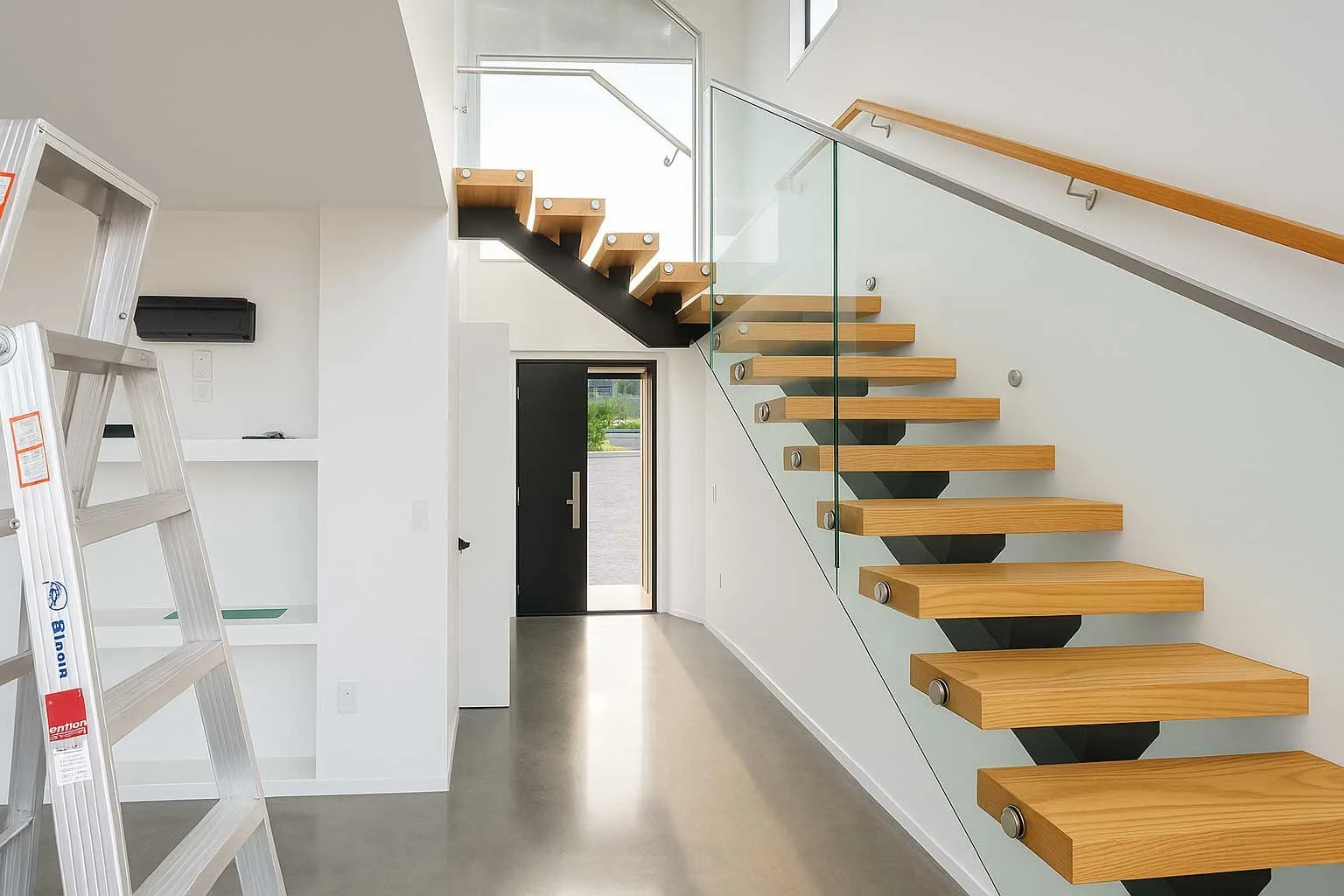 |
| Finished walls beside the staircase on the same Pirongia new build. |
Put the finish level in writing before stopping begins
All of that feeds into how our GIB stopping Hamilton work gets scoped, with painting priced on the same document, since sealer and sheen are chosen against the standard you agreed to. Six things belong in writing before compound comes out:
- The finish level for walls and for ceilings, named space by space rather than as one blanket standard
- Who carries framing tolerances and back-blocking if Level 5 appears anywhere
- The sealer and paint sheen per room, chosen against that level
- The lighting the work gets inspected under, and when
- Drying time between compound passes, because touch-dry is not the same as ready to sand
- Any repairs, paste residue or textured ceilings needing assessment before a start date
With that written down, two quotes can genuinely be compared, and the stopper and the painter aim at one target. The stages that follow appear in what interior painting covers, and the wider list of scopes is at https://hamilton.tomarcontracting.co.nz/painting-services-hamilton.html.
FAQ
Is a Level 5 finish worth specifying for a bedroom?
Rarely. A bedroom with a side window or two and a central fitting gives diffuse light from several directions, the least demanding condition a wall can sit in. Spend the preparation on a hallway or a ceiling under recessed lighting instead.
Can we upgrade to Level 5 after the board has already been stopped?
Partly, and that is the problem. The full-surface compound coat can still go over finished Level 4 work, but the substrate requirements that make the specification worth having were settled the day the sheets went up. Agreeing the level beforehand costs nothing; changing it later does.
Do ceilings need the same finish level as the walls in the same room?
Not necessarily, and treating the two as one item is a common mistake. Ceilings catch light from fittings mounted right against them, so one under recessed lights can need more work than the walls beneath. Specify them separately and inspect each under the lighting the room will use.
Plastering, stopping, skim coats and specified Level 5 work all sit inside the interior scope quoted by Tomar Contracting Limited – Hamilton & Waikato, whose Hamilton team works out of 59 Boundary Road, Claudelands. Cambridge, Te Awamutu, Morrinsville, Ngāruawāhia and the wider Waikato are covered as well. A weekday call to 0800 866 272 between 9 am and 5 pm puts a site assessment in the diary.


Comments
Post a Comment